
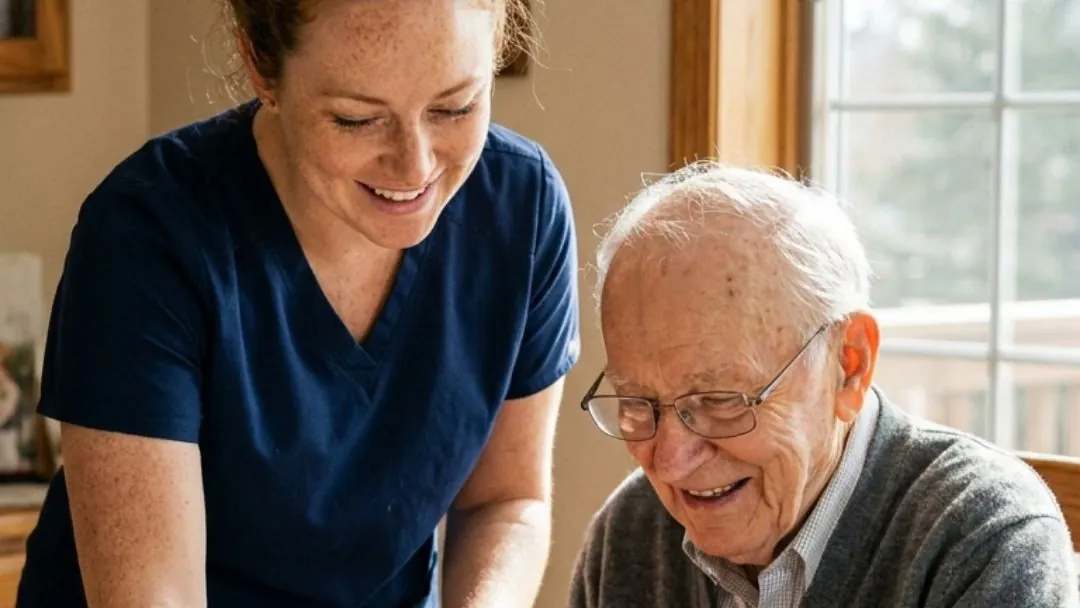
When people in Springfield search for “home health care,” they usually mean one of two very different things. Home health is medical care at home that a doctor orders, usually for a short time after an illness, surgery or hospital stay. Home care is help with everyday life at home, like bathing, meals and company, for as long as it’s needed.
Caring Companions provides home care, not home health. Many families end up using both at the same time, so here is how they differ and how to ask for the right one.
The short answer
- Need a nurse or a therapist? That’s home health. Their doctor orders it.
- Need someone to help with daily life and keep them company? That’s home care. You can call an agency like ours directly, no doctor’s order needed.
- Just home from the hospital? Often both: home health for the medical part, home care for everything in between.
Side by side
Home health
- Medical care: nursing, wound care, physical, occupational or speech therapy
- A doctor orders it and signs a plan of care
- Visits are usually short, a few times a week
- Lasts while the person is recovering or needs skilled care
- Medicare often pays when the person meets Medicare’s rules, such as being homebound
- Provided by a Medicare-certified home health agency
Home care (what we do)
- Everyday help: company, meals, bathing, dressing, rides, light housekeeping and medication reminders
- No doctor’s order needed. You call us
- Visits are usually 4 hours or more, up to around the clock
- Lasts as long as you need it, and can grow as needs change
- Usually private pay or long-term care insurance. VA benefits and Medicare GUIDE can help some families
- Provided by trained caregivers who are our employees
Medicare does not pay for ongoing help with daily activities like bathing and meals when that is the only care someone needs, and it does not pay for 24-hour care at home. Medicare’s home health rules.
Using both at once
Here is a common example. Dad comes home after a stay at the hospital. A home health nurse visits twice a week to check on him, and a physical therapist works on his walking. In between, a Caring Companions caregiver is there for several hours a day to help him shower safely, make meals, get to appointments and keep him company.
When home health ends, usually once he has recovered enough, the home care can simply continue for as long as the family wants it. Families tell us the hardest part is the gap between visits, and that is exactly where home care fits.
How to get each one
Home health: ask their doctor, or the hospital discharge planner before they leave the hospital. The doctor orders it, and you can choose which certified agency provides it.
Home care: call us at (417) 234-8494. We come to the house for a free in-home assessment, meet your loved one and build a care plan with you. Once the assessment and care plan are done, care can sometimes begin the same day or next day, depending on how quickly we can find the right caregiver. What happens after you call.
What our caregivers do, and what they don’t
Our caregivers can
- Help with bathing, dressing, toileting and moving around safely
- Cook meals, do laundry and keep the home tidy
- Give medication reminders
- Drive to appointments and errands
- Keep them company and notice changes
Our caregivers don’t
- Give medicine or injections
- Change dressings or care for wounds
- Do nursing tasks or therapy
Those are jobs for the doctor, a nurse or a home health agency. Our care is non-medical.
What home care costs
Care is $30 to $34 an hour, depending on how much hands-on help is needed. Visits are usually 4 hours or more, at least 8 hours a week, with no deposit and no long-term contract. See our rates.
Ways to pay include private pay and long-term care insurance. We are in network with VA Community Care, and we work with Medicare GUIDE, which may pay for respite visits for families caring for someone with dementia. Ask us how billing works for your plan. On Missouri Medicaid? Our sister company, Caring Companions CDS, can help through Missouri’s Consumer Directed Services program.
Help in Springfield besides us
SeniorAge is the Area Agency on Aging for southwest Missouri. They can point you to meals, rides, legal help, caregiver support and respite in your county: (417) 862-0762. Our Southwest Missouri caregiver resources page lists more local help.
Want to talk it through?
Call us and a real person answers, day or night. We can come to the house for a free in-home assessment and build a plan with you, with no pressure to decide anything.
Call (417) 234-8494Request a free assessmentSource for the Medicare information on this page:
This guide is general information from our team, not medical or legal advice. Medicare decides what it covers for each person.