
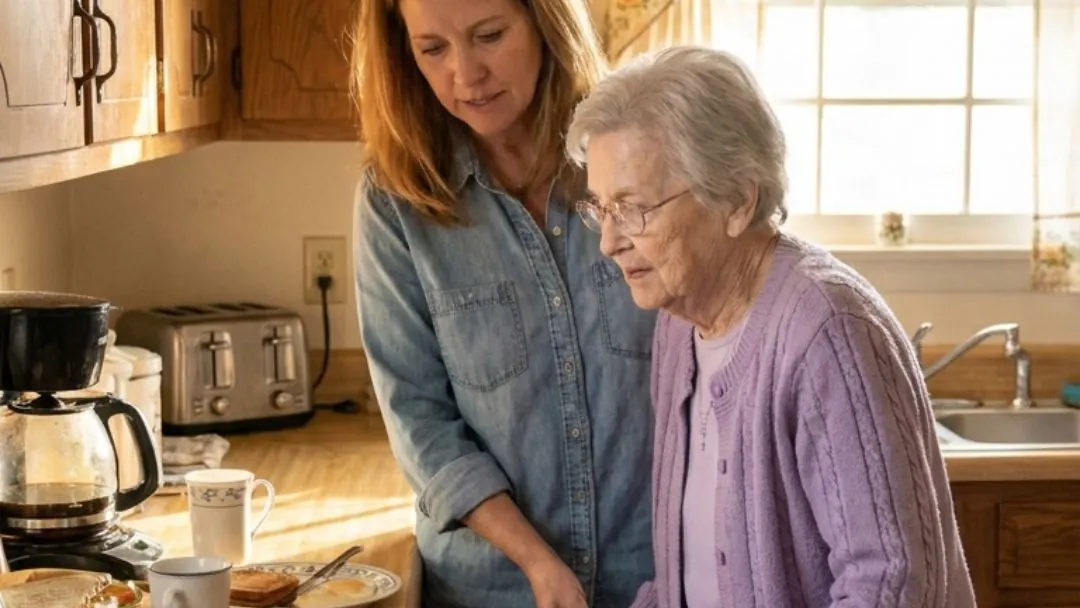
It often starts small. Food goes bad in the fridge. The same frozen dinner every night. Clothes that fit a little looser. Your mom says she is “just not hungry.”
Not eating well is one of the easiest problems to miss and one of the most important to catch, because it can lead to weakness, falls and getting sick more easily. Here is why it happens, what helps, and what meal help from us looks like.
Why it happens
- Food tastes and smells different with age, and some medicines dull appetite.
- Sore teeth or loose dentures make chewing hard.
- Cooking for one feels like too much work, and eating alone is lonely.
- Shopping and standing at the stove get tiring.
- Sometimes it is a sign of something else, like depression or memory changes. That is worth a doctor visit.
What helps
- Smaller meals and snacks more often, instead of three big meals.
- Company at the table. People usually eat more when they are not eating alone.
- Easy food that is already made: soups, casseroles and snacks within reach.
- Water and drinks they like, kept where they sit.
- A dentist visit if chewing seems to hurt.
What a week of help can look like
For example: Monday and Thursday, 10 a.m. to 2 p.m.
- A grocery trip together, so they still choose their own food
- Cooking a real lunch and sitting down to eat it together
- Extra portions labeled for the days in between
- Cleaning out old food from the fridge
- Snacks and drinks set out where they sit
- Following any diet the doctor gave, like low salt or diabetic
- A note after the visit about how much they ate
This is an example. Every plan is built with your family at the assessment visit, and it can change as needs change.
What our caregivers do, and what they don’t
Our caregivers can
- Grocery shop, cook and clean up
- Eat with them and keep them company
- Follow the diet their doctor gave
- Help with eating if hands are shaky or weak
- Notice weight loss, skipped meals or trouble chewing, and tell you and our office
Our caregivers don’t
- Tube feeding or any nursing task
- Give medicine or nutrition supplements as a treatment
- Diagnose why they are not eating
If eating has changed a lot, start with their doctor. We help with the everyday part.
When to call
Call the doctor the same day
- Losing weight without trying
- Skipping meals most days
- Coughing or choking when eating or drinking
- Trouble chewing or a sore mouth
- Not drinking much, or seeming weak or dizzy
Call 911
- Choking that doesn’t clear
- Not alert, or very confused all of a sudden
- Too weak to stand or get out of bed
Always follow what their own doctor told you first. If a caregiver sees an emergency during a visit, they call 911 and then our office, and we call you.
What to tell us at the assessment visit
Jot these down before we come. It helps us build the right plan the first time.
- What they used to love to eat
- Any diet the doctor gave
- Teeth, dentures or swallowing trouble
- How their weight has changed
- Which meals get skipped most
- Whether they would like company at mealtime
Help in Springfield besides us
SeniorAge, the Area Agency on Aging for southwest Missouri, runs home-delivered meals and senior-center lunches across the region, plus rides and caregiver support: (417) 862-0762. Our Southwest Missouri caregiver resources page lists more local help.
What it costs
Care is $30 to $34 an hour, depending on how much hands-on help is needed. Visits are usually 4 hours or more, at least 8 hours a week, with no deposit and no long-term contract. See our rates.
Want to talk it through?
Call us and a real person answers, day or night. We can come to the house for a free in-home assessment and build a plan with you, with no pressure to decide anything.
Call (417) 234-8494Request a free assessmentThis guide is general information from our team, not medical advice. Their own doctor and pharmacist know them best.