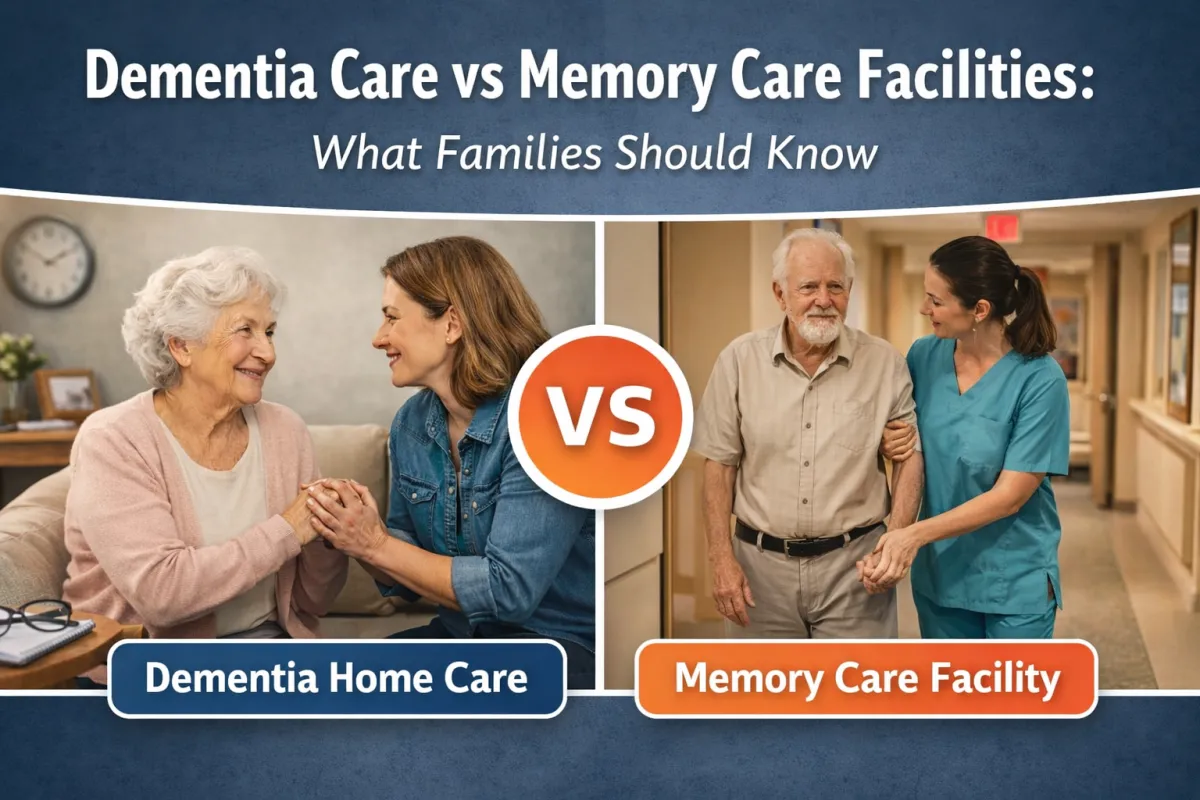
Dementia Care vs Memory Care Facilities: What Families Should Know
Dementia Care vs Memory Care Facilities: What Families Should Know
Choosing the right care setting for a loved one living with dementia can be one of the most important decisions a family makes. While both dementia care and memory care facilities are focused on supporting people with cognitive decline, they are not the same — and understanding the differences can help you make the best choice for comfort, safety, and long-term well-being.
At Caring Companions, we help families compare options so you know what each type of care offers and when one path may be more appropriate than another.
What Is Dementia Care?
Dementia care is a broad term that describes support provided to individuals living with Alzheimer’s disease and other forms of cognitive impairment. Dementia care can take place in different settings and includes services that help with daily life and safety:
In-home care by professional caregivers
Assistance with personal tasks (bathing, dressing, eating)
Supervision and fall prevention
Companionship and emotional support
Routine and behavior support
Help with medication reminders and simple routines
In-home dementia care allows seniors to remain in familiar surroundings, which can reduce stress and confusion. Remaining at home often provides stability, continuity, and emotional comfort for the person living with dementia.
What Is a Memory Care Facility?
A memory care facility is a residential setting specifically designed for individuals with moderate to advanced dementia. These communities typically feature:
24/7 supervision
A secure environment to prevent wandering
Specially trained staff in dementia care
Structured daily routines
Engaging activities tailored to cognitive abilities
On-site support for meal service and medication management
Memory care communities are often part of a larger senior living campus, but they focus specifically on meeting the challenges associated with memory impairment.
According to senior care industry resources, memory care usually provides more specialized support than generic assisted living — including higher staff-to-resident ratios and activities designed for cognitive engagement.
Key Differences: Home Dementia Care vs Memory Care Communities
Feature Dementia Home Care Memory Care Facility
Location In the senior’s own home Residential community tailored to dementia
Supervision Level Flexible; based on need Continuous 24/7 supervision
Care Model One-on-one or rotating caregiver Structured group care
Environment Familiar, personalized Designed for safety with secure exits & routines
Activities Personalized activities at home Structured cognitive and social programs
Ideal For Early to moderate stage, Moderate to advanced safety manageable stage, frequent supervision needed
This table reflects how home care and memory care differ in setting, intensity of supervision, and purpose.
When Home Dementia Care Is a Good Option
Home care may be the right choice when:
The senior is safest in a familiar environment
Family is actively involved in daily routines
Needs are moderate and can be met with scheduled visits
One-on-one attention is helpful for emotional comfort
Many families find home care supportive in the early and middle stages of dementia, providing personalized help while preserving independence.
When to Consider Memory Care
Transitioning to a memory care facility may be advisable when:
Safety risks (like wandering) increase
Nighttime supervision is needed
Caregiver burnout limits your ability to care safely at home
Daily activities become too difficult for home care alone
Providers and memory care specialists often recommend considering facility care when behavioral symptoms escalate or care needs exceed what can be safely provided in the home.
How Families Often Combine Both
Some families begin with dementia care at home and later transition to memory care as needs grow. A “phased approach” allows:
Time in the home while cognitive decline is manageable
Gradual adjustment to new environments
Ongoing family involvement and support
There’s no single “right time.” Instead, families weigh safety, quality of life, and the senior’s preferences.
A Family-Centered Perspective
Whether you choose in-home dementia care or a memory care facility, the goal is the same: ensuring dignity, safety, and well-being. Each person’s journey with dementia is unique, and care plans should reflect individual comfort levels, behavior patterns, and needs.
If you’re unsure which option is best for your loved one, Caring Companions can help you explore choices and develop a care plan that fits your situation.
📞 Call Caring Companions to talk about dementia care, memory care options, and how to support your family through every stage.
Sources & Further Reading
Comparison of memory care vs home care for dementia (A Place for Mom)
Broader view of dementia care services and settings (Alzheimer’s Association)
Senior care insights on home vs memory care environments (Care.com)
When to consider transitioning to memory care (OneLife Senior Living)
